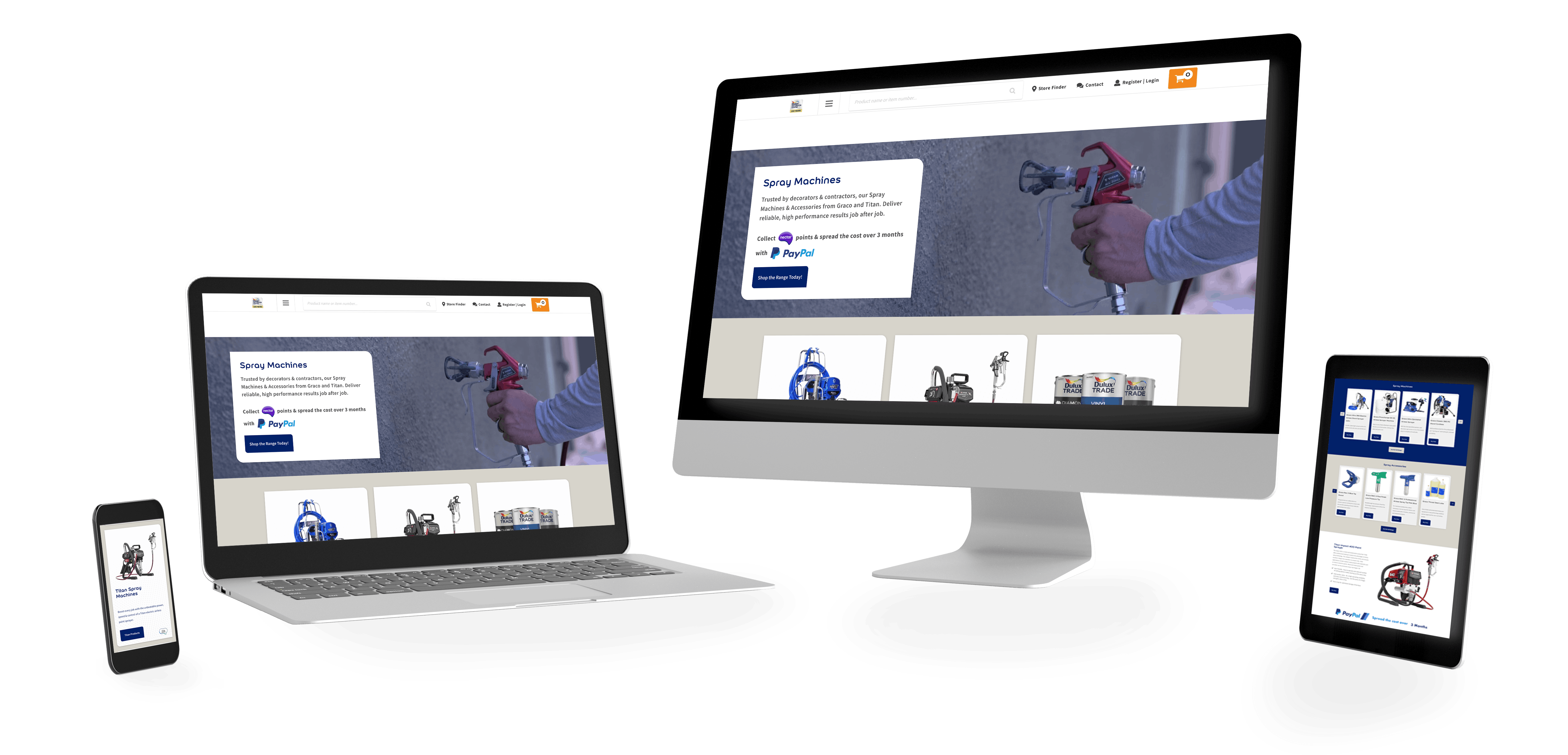
To help professional decorators:
Spray machines are not impulse purchases.
They are:
The challenge was to create a page that:
Many ecommerce pages fail here by:
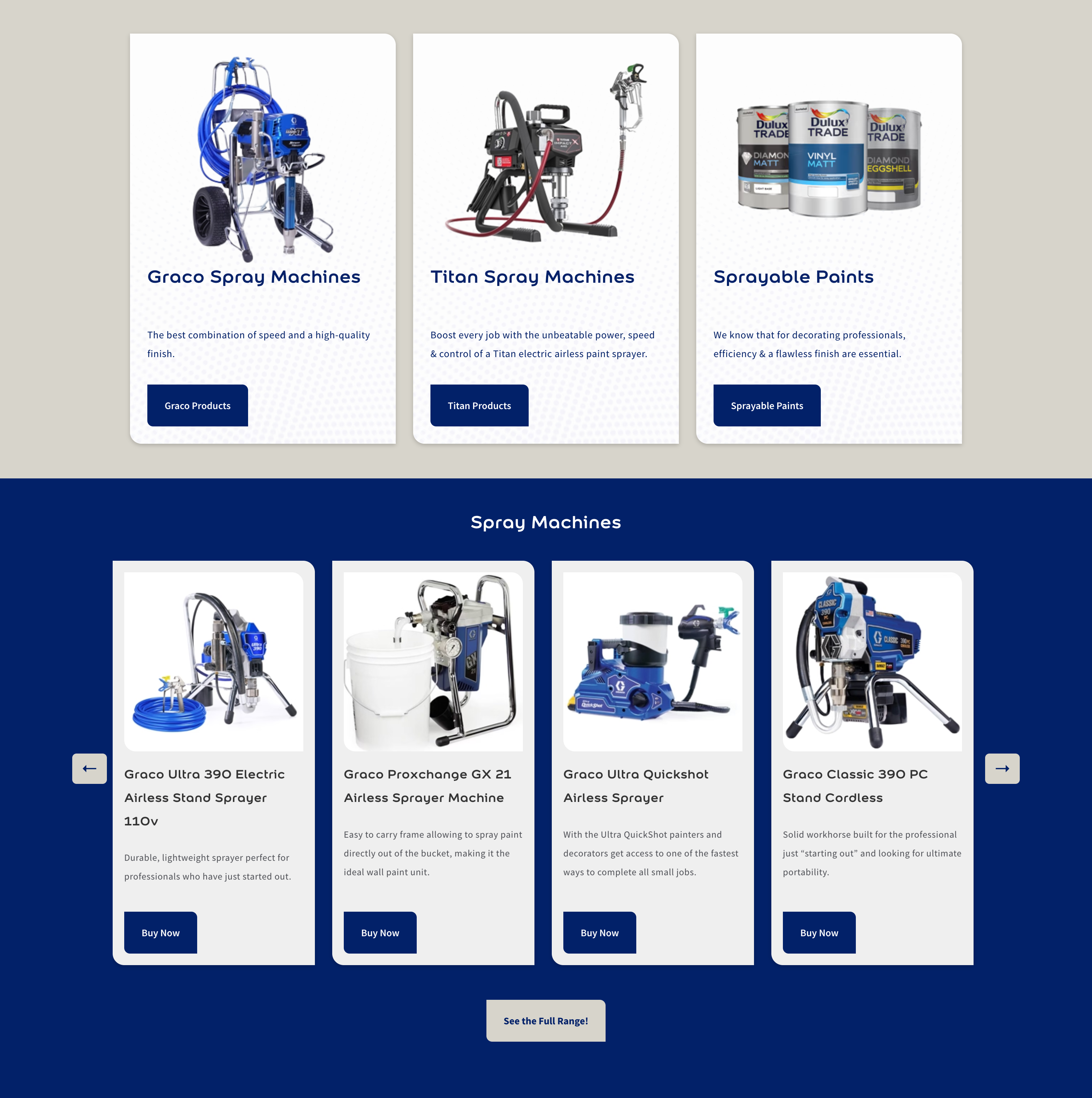
Rather than focusing purely on selling products, the page was designed to support the buying decision itself.
Products are grouped logically:
This allows users to:
The structure reflects how professionals actually think when buying equipment.
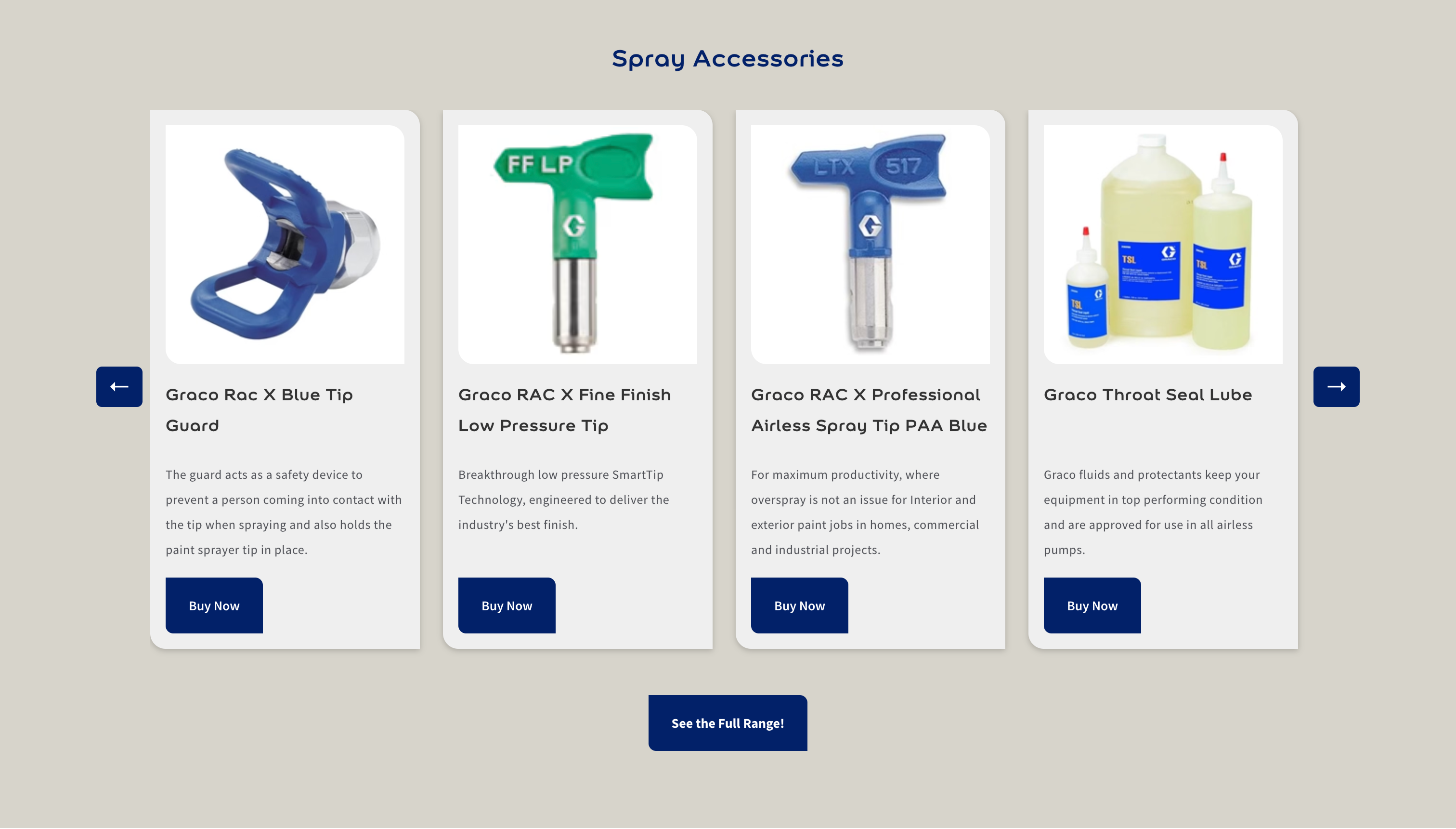
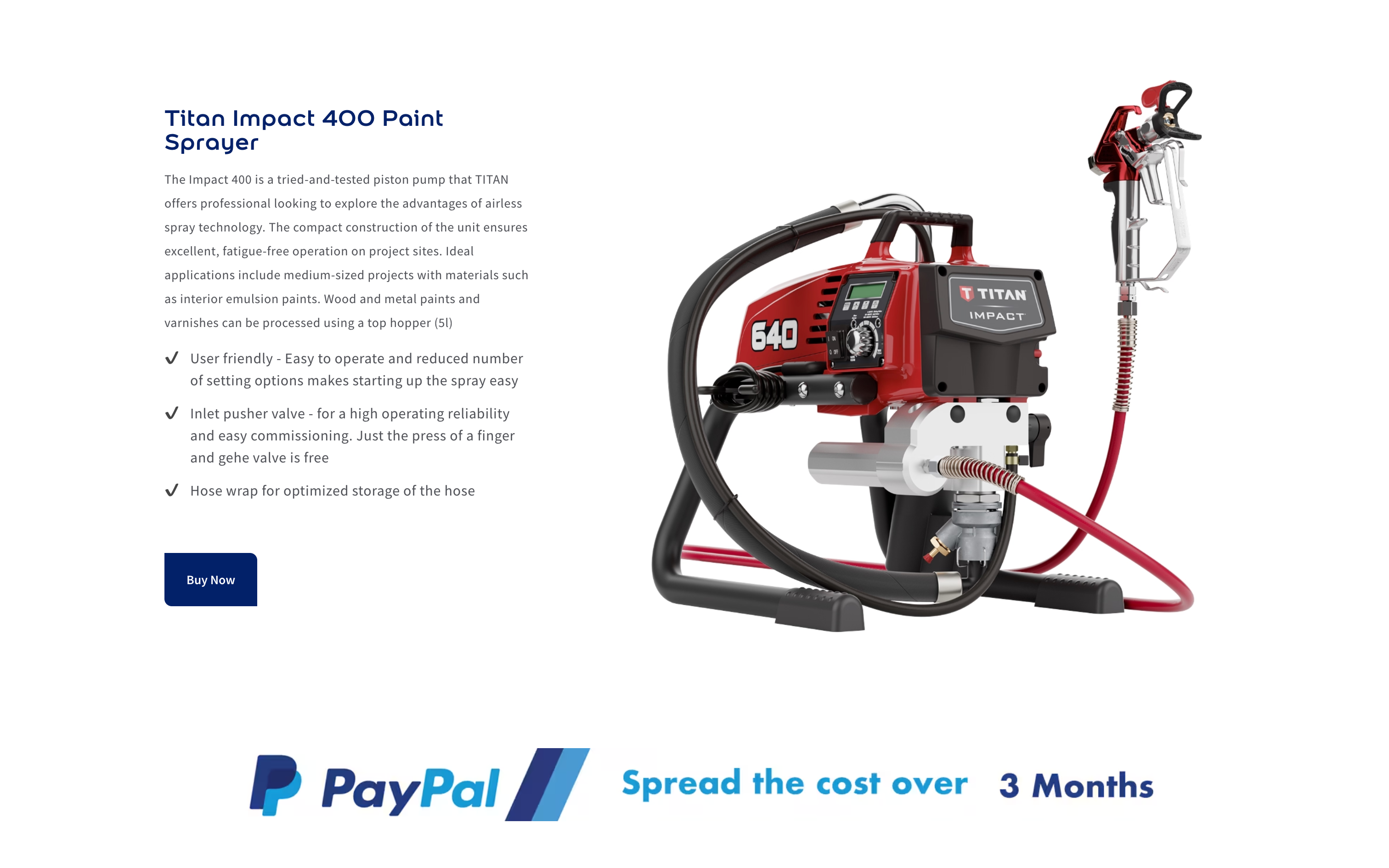
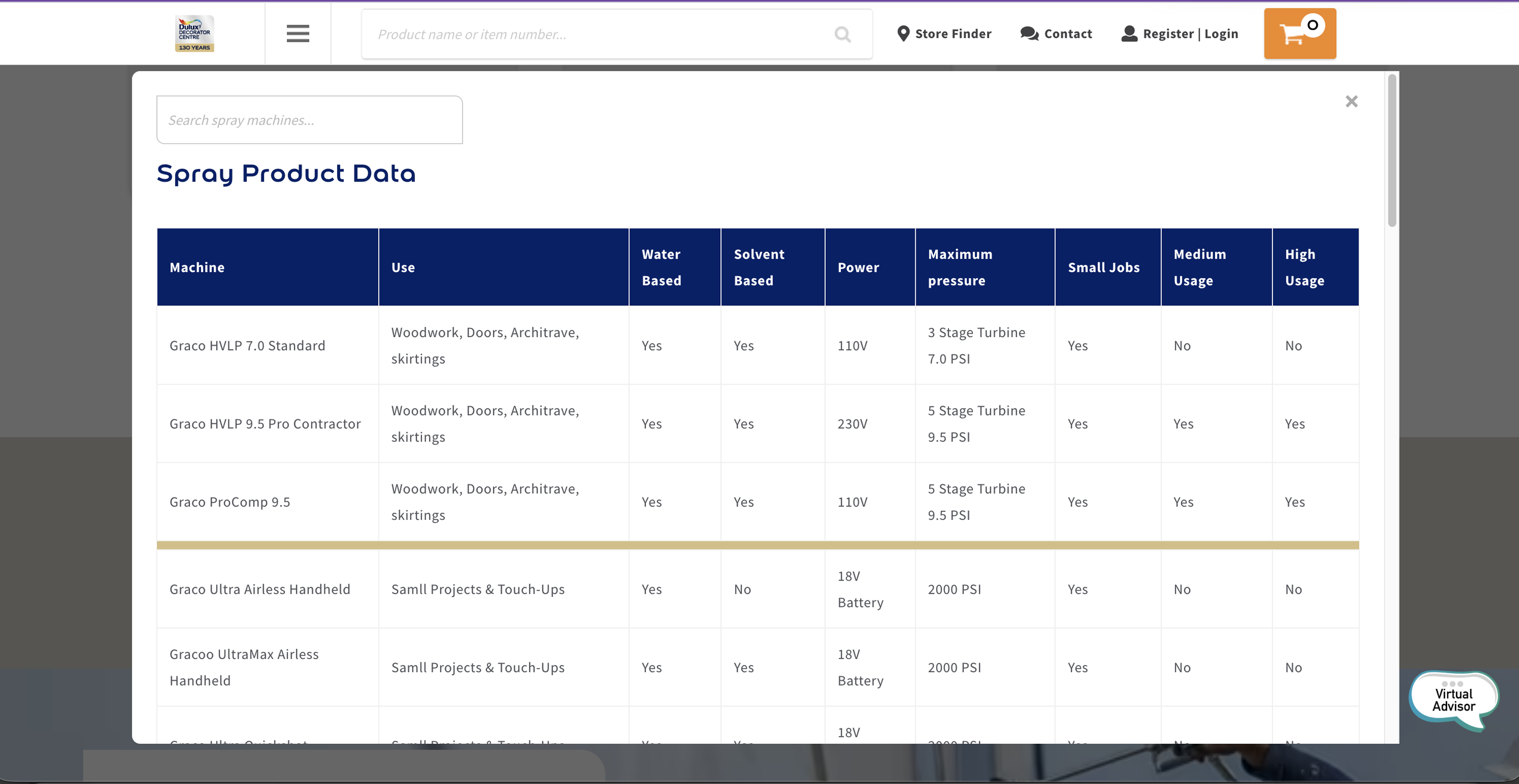
Instead of displaying all specifications inline:
Why this works:
This is a deliberate UX decision designed for
high-consideration purchases.
The page includes:
This builds:
Rather than forcing users to leave the page to research elsewhere, the information they need is already present.
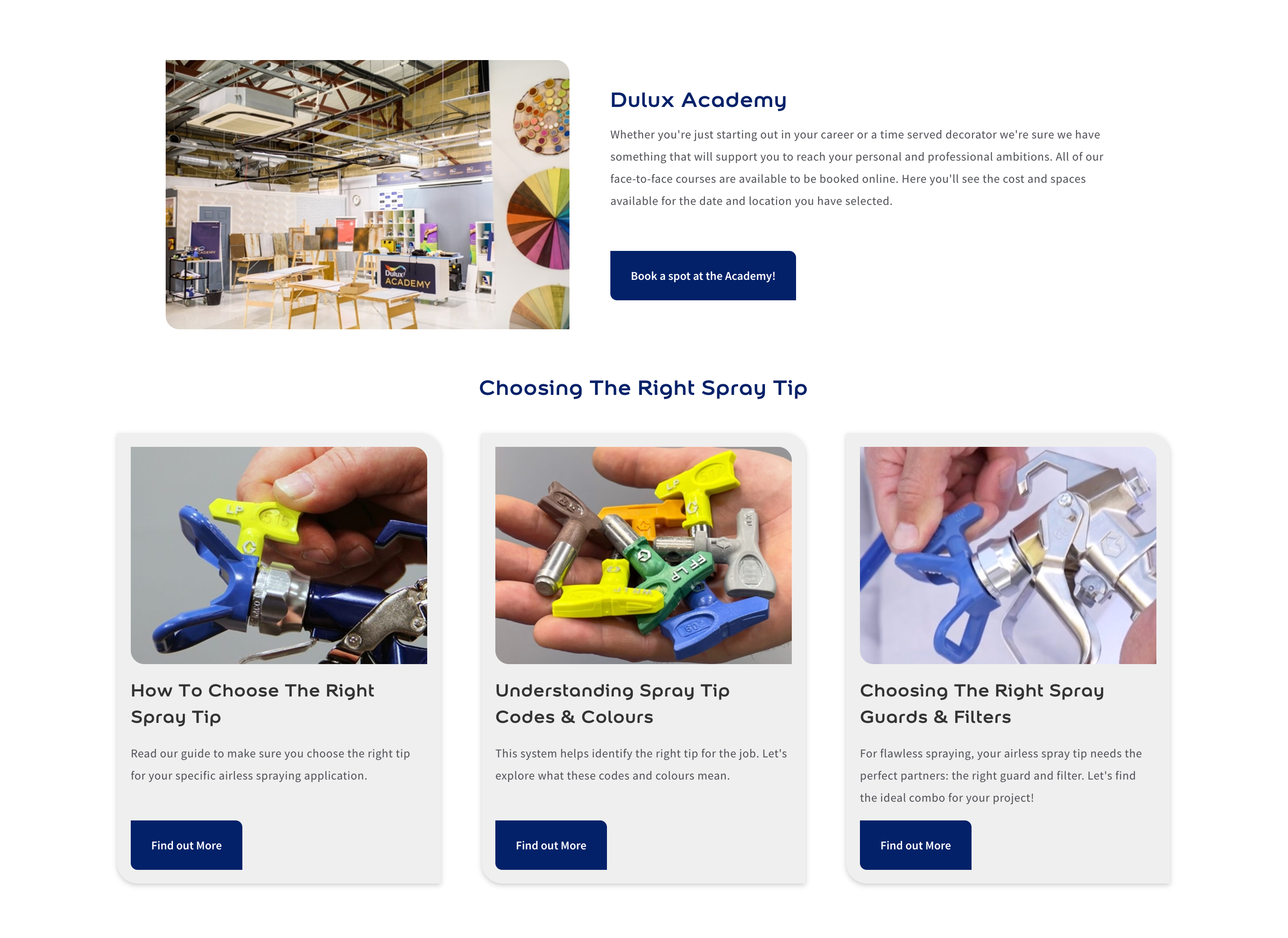
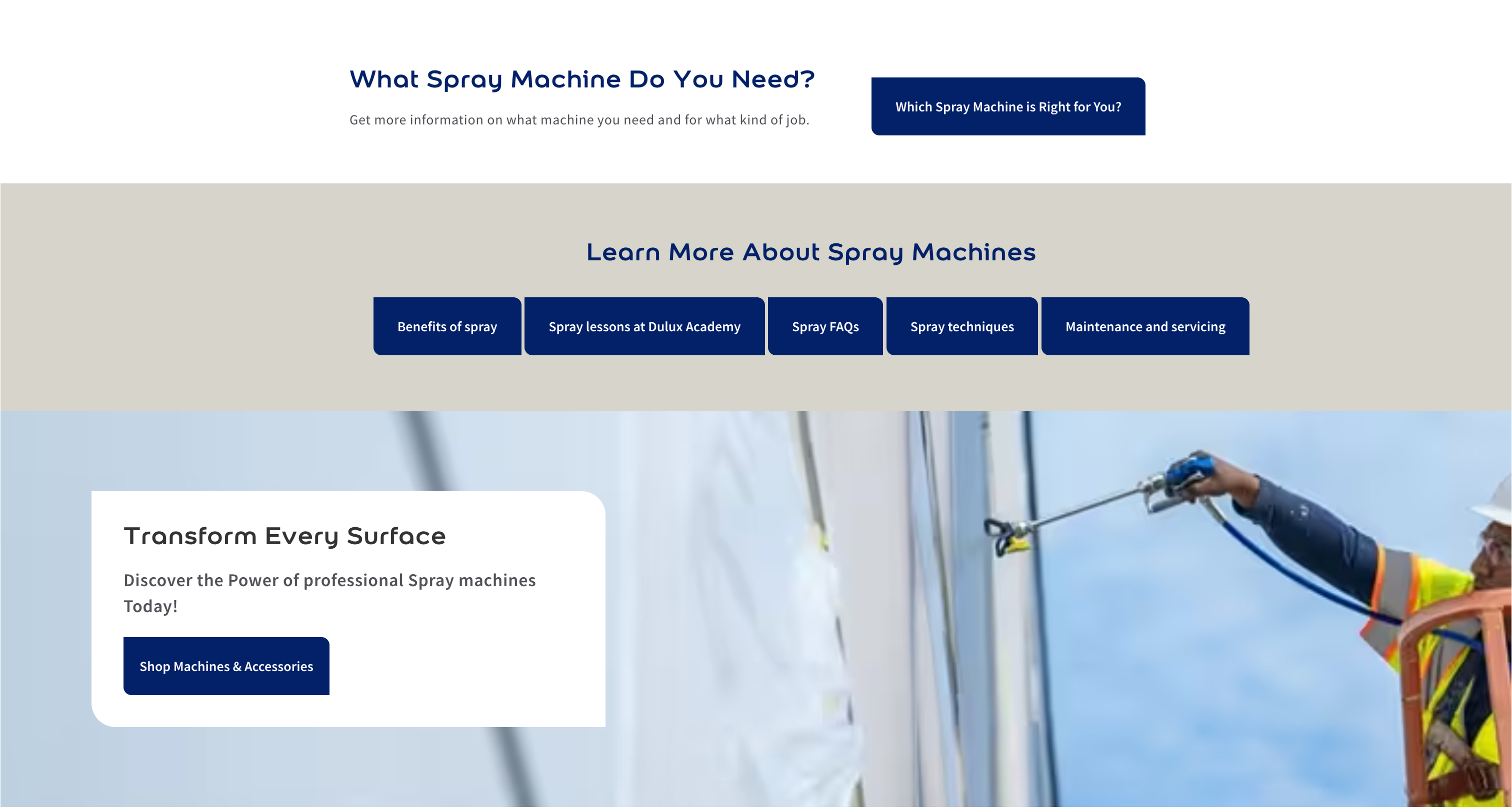
Key design decisions include:
Nothing competes unnecessarily for attention.
This is especially important when selling expensive equipment, confusion leads to hesitation.
Spray machines are high-value, technical products, and the biggest barrier to purchase is rarely price alone it’s uncertainty.
This page was designed to manage complexity without overwhelming the user. Instead of presenting all specifications, options, and accessories at once, information is layered progressively. Core product details are visible immediately, while deeper technical comparisons are accessible through a dedicated modal containing a structured comparison table.
This approach allows users to explore confidently at their own pace. Experienced professionals can dive straight into specifications, while first-time buyers are not confronted with dense data before they understand which category or product is right for them.
By separating exploration from detail, the page supports informed decision-making without increasing cognitive load — a critical factor when selling expensive equipment.
The final page delivers a clear, confidence-led purchasing journey tailored to high-consideration products.
Rather than relying on urgency or aggressive sales tactics, the structure supports conversion through clarity. Users are guided logically through product categories, supported by educational content, and given access to detailed technical information only when they need it.
This structure enables the page to scale over time, accommodate additional products, and remain usable even as complexity increases. Most importantly, it allows customers to make considered purchasing decisions — reducing hesitation, increasing trust, and supporting long-term performance rather than short-term clicks.